Structural Silicone Glazing
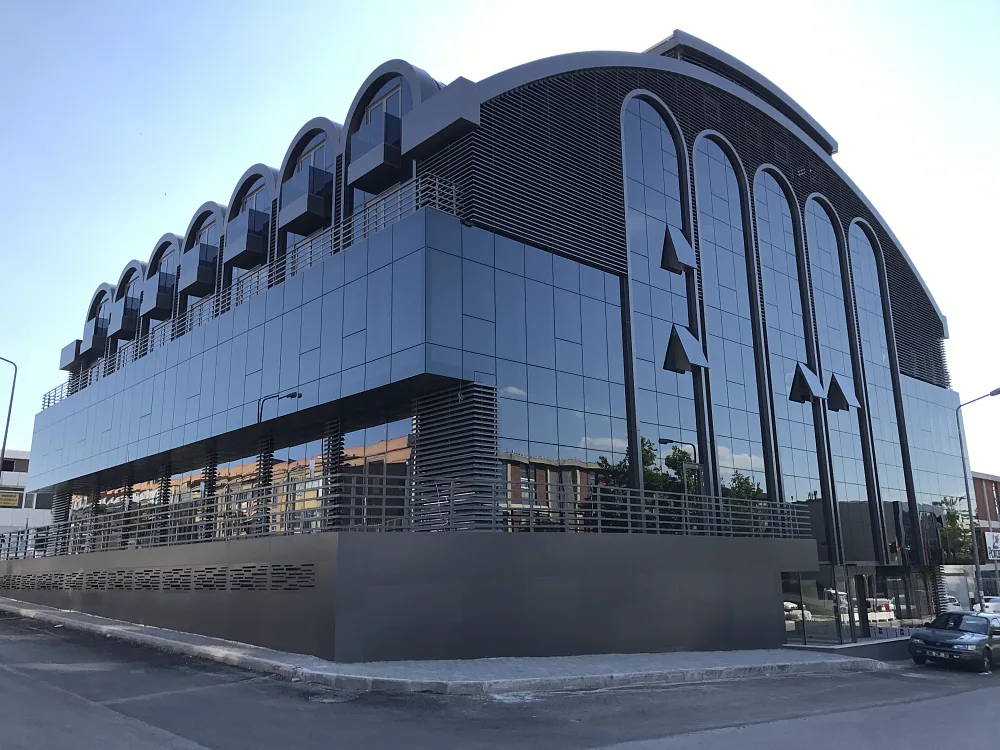
A curtain wall in which the glass is bonded to aluminium frames with structural silicone. No profiles show on the outside; the facade reads as glass and thin joints.
About the system
In a structural silicone glazing system, what holds the glass in place is not a profile screwed on from outside but a silicone bond that joins the back of the glass to an aluminium frame. Wind pressure and suction acting on the glass are transferred through this bond to the supporting framework, so the safety of the system depends on the bond being correctly designed and carefully made. At Gündüz Alüminyum we install this type of curtain wall on commercial, industrial and residential buildings in Ankara.
From survey to installation
The process starts with measurements taken on the building: the units are made to these dimensions, and deviations in the concrete structure are taken up by the adjustable brackets that connect the framework to the floor slabs. The dimensions of the silicone bond are calculated from the glass size, the wind load and thermal movement. The edge seal of the insulating glass units must also be made with a silicone suitable for this use. Bonding is done not on site but in a clean, controlled environment: the surfaces are cleaned and prepared, the compatibility of the silicone with the glass and aluminium is tested in advance, and the units are not moved until the silicone has cured sufficiently.
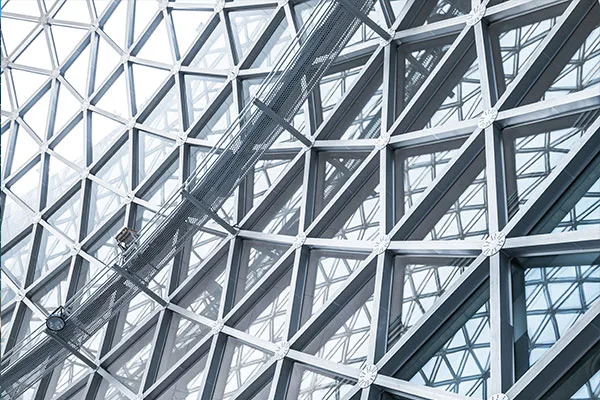
On site, the glazed units are fixed to an aluminium grid of mullions and transoms, and the thin joints between the panes are sealed separately to keep out air and water. Concealed outward-opening vents can be fitted where ventilation is needed. Because the vent frame also sits behind the glass, a closed vent is hard to tell apart from the fixed panes when seen from outside. These vents open only a limited distance, so ventilation needs should be taken into account when the facade layout is drawn up.
Where it is used
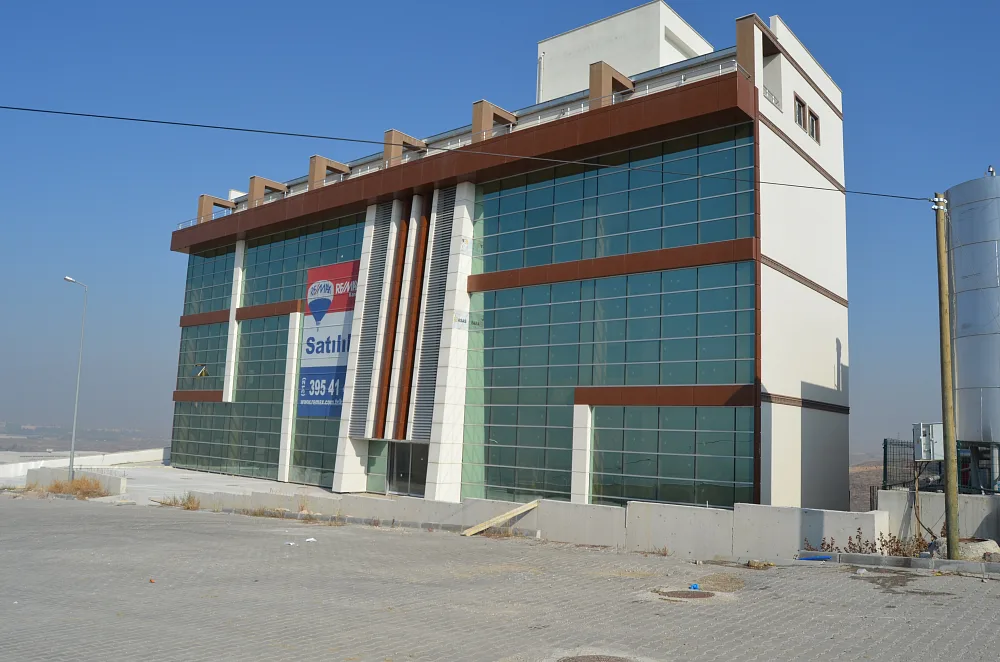
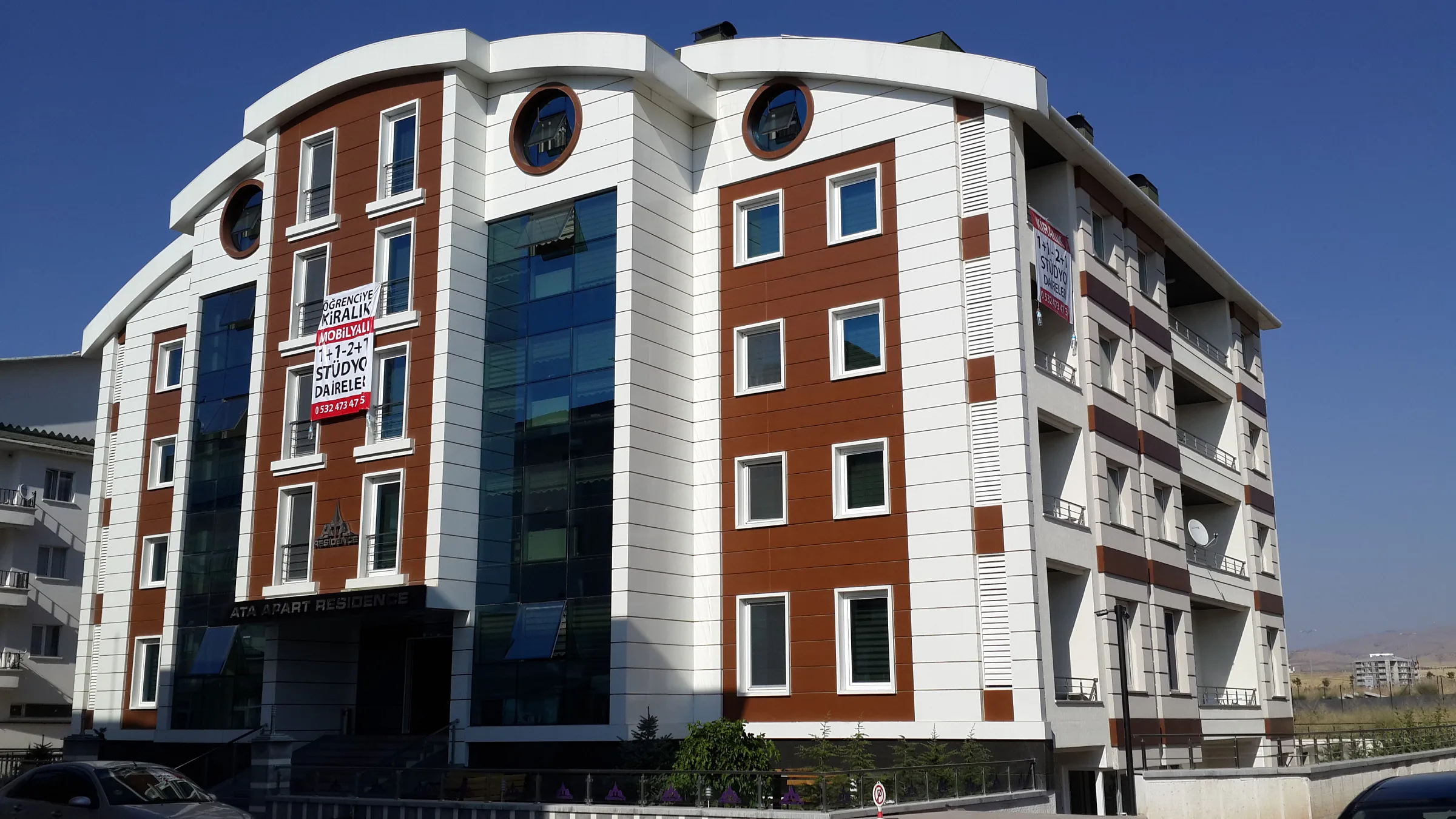
Structural silicone glazing comes into its own when a building is meant to look like a single surface of glass; office buildings, business centres and hotels are typical examples. On a facade like this, the colour and reflectivity of the glass define the character of the building, so the glass should be chosen at the start of the project, on the basis of samples. Buildings where we have applied this system include Ata Rezidans in Gölbaşı and Dilegno Mobilya Fabrikası.
Before you decide
- Programme: Glass production, bonding and curing all have to be completed before installation, and this time must be allowed for in the site programme from the outset. We build these stages into our work plan and aim to hand over the facade complete on the date we have committed to.
- Glass replacement: A broken pane cannot simply be swapped for a new one. The new glass can only be installed once it has been bonded to a frame and the silicone has cured, so replacement takes longer than on capped systems.
- Alternative: If an uninterrupted glass surface is not essential, capped and semi-structural curtain walls, where the caps remain visible on the facade, are a simpler option to fabricate.
- Maintenance: Solvent-based cleaning agents that could damage the silicone should not be used, and the joints and vent mechanisms should be inspected at regular intervals.
Facade Systems
Other services in this group.