Thermally Broken Aluminium Windows and Doors
Aluminium windows and doors for the building envelope, with a thermal break between the inner and outer profiles. Made in any RAL colour and every opening type.
About the system
Aluminium is a very good conductor of heat. In thermally broken aluminium windows and doors, the inner and outer parts of each profile are separated by a thermal break, a barrier with low conductivity, which greatly reduces the heat escaping through the frame in winter and entering through it in summer. At Gündüz Alüminyum, we fabricate the external windows and doors of residential, commercial and industrial buildings in Ankara with this system and install them with our own team.
When is it needed?
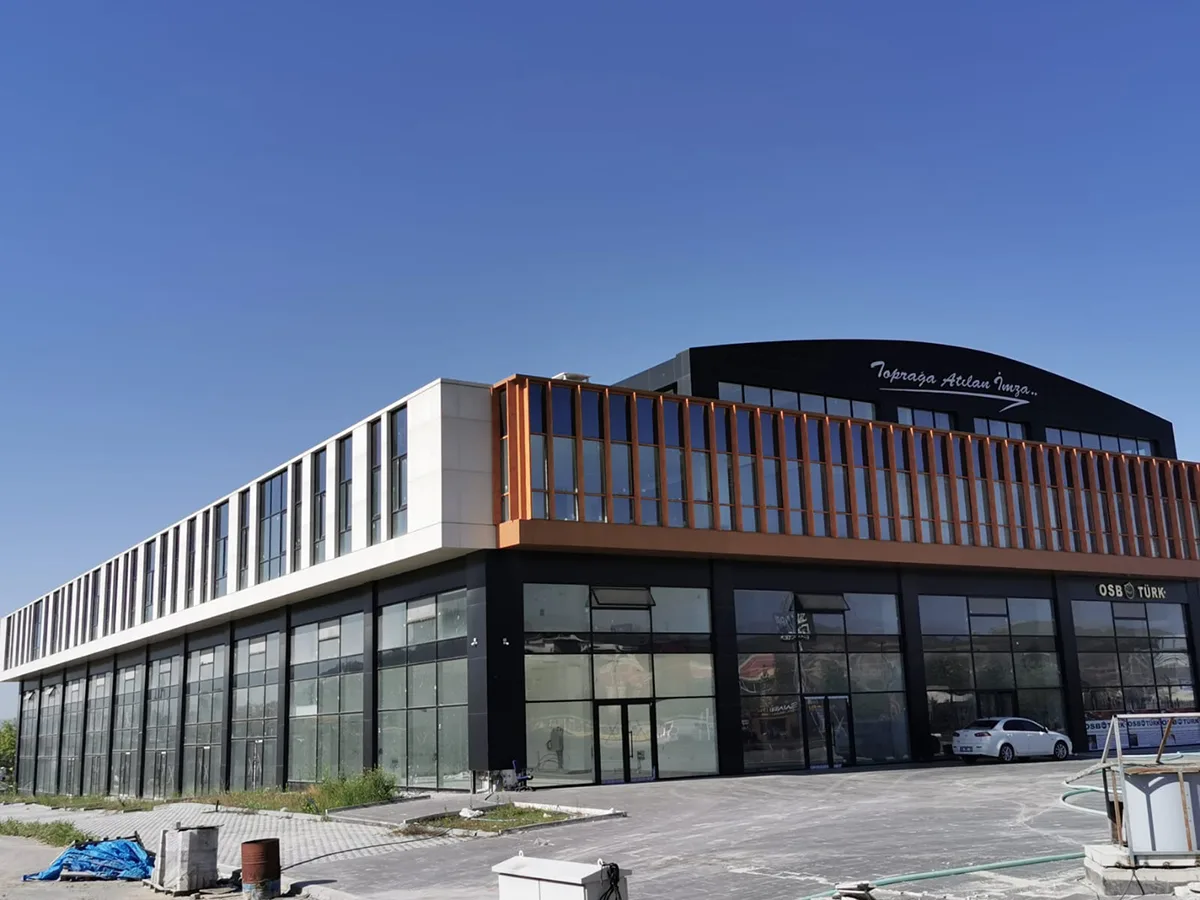
If one face of a window or door looks onto a heated or cooled space and the other onto the outside air, it needs a thermal break. This covers the external windows of homes, offices and shops, balcony and terrace doors, and the windows and doors of heated areas in factories. At the OSB Türk building, for example, we installed thermally broken aluminium windows and doors together with the curtain walling and composite panel cladding. In heated and cooled buildings, the main benefits of the system are:
- Energy savings: Less heat passes through the frame, so less energy is spent on heating and cooling.
- Less condensation: During the winter months in Ankara, the inner face of a non-insulated profile gets very cold; moist room air condenses on it, water runs down onto the sill, and over time mould or blistering paint can appear. The thermal break keeps the inner surface warmer and reduces this risk.
- Comfort: Because the frame surfaces stay warmer, there is less of a cold feeling next to the window.
In unheated stores, or for partitions and doors inside a building, a thermal break is usually unnecessary; for this kind of work, non-insulated aluminium windows and doors are a more economical option.
What determines performance
A thermal break alone is not enough: the real performance of a window depends on the profile, the glass and the installation together. That is why we pay particular attention to three points:
- Glass: Most of a window’s surface is glass. If a thermally broken profile is fitted with single glazing, most of the expected benefit is lost; the profile should be specified together with double glazing.
- Weathertightness: The EPDM gaskets between frame and sash keep out air and water. For this, the sash must press evenly on the gasket all the way round, which means it has to be adjusted correctly.
- Installation joint: If the gap between the frame and the wall is not insulated and properly sealed, the gain achieved in the profile is wasted at this joint.
Our process
- Survey and measurement: We measure the openings on site and look at how straight the walls are and how the windows will meet the external wall insulation.
- System selection and quotation: We choose the profile series according to sash size and opening type, and the glass according to the orientation of the facade and the use of the space, then prepare the quotation on that basis.
- Fabrication in our workshop: The profiles are cut to size and assembled in our workshop; the units arrive on site with their gaskets and hardware already fitted.
- Installation: We fix the frame to a subframe or to a straight wall, checking that it is level and plumb. We then fill the gap between frame and wall with insulation and seal it inside and out.
- Handover and warranty: We check that every sash opens easily and sits properly against its gaskets before handing over. All our installations come with a 2-year installation warranty.
Maintenance
Little maintenance is needed, but it should be done regularly. Keep the drainage holes in the bottom frame clear, and replace any gaskets that tear or harden. Lubricating hinges and locking mechanisms from time to time keeps the sashes working smoothly. Wiping painted surfaces with water and a mild detergent is enough; abrasive cleaners damage the paint.
Windows and Doors
Other services in this group.